

The Basics of Towing
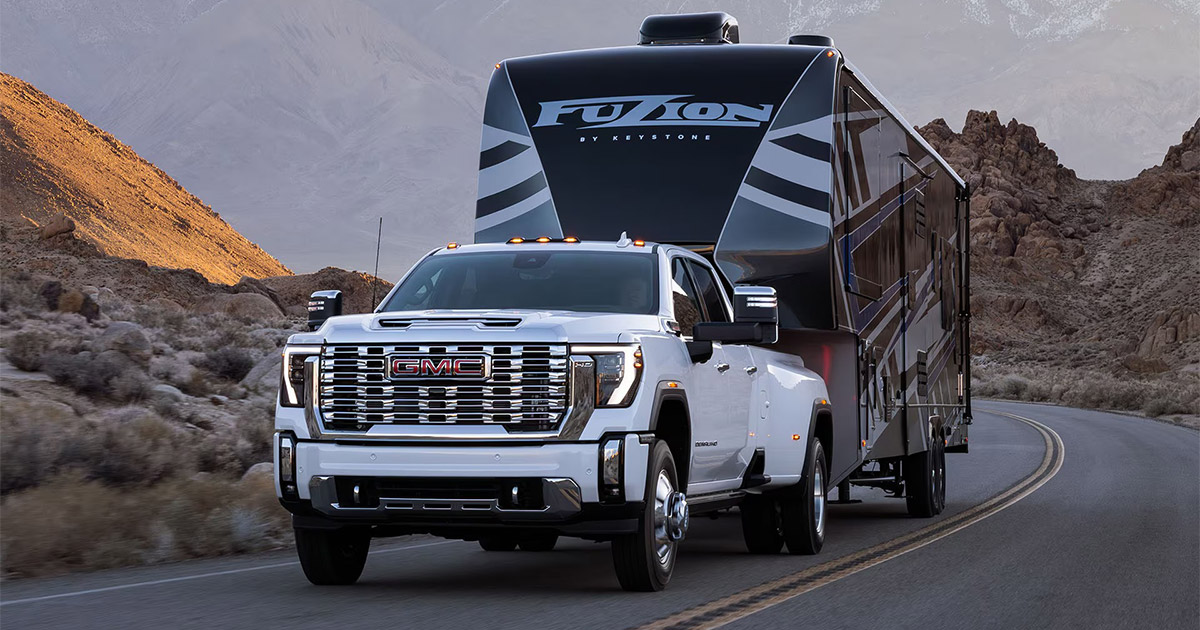
Keep These Pointers in Tow:
Know your weight limits and read your trailering guide!
It’s important to understand the weight capacity of your vehicle’s towing capability. A lot of factors can determine the trailering limit of a vehicle from the engine, cab, drivetrain, type of hitch setup and more.
Below are a few terms to learn and remember when looking at your vehicle’s trailering guide.
Basic Curb Weight
This is the weight of your vehicle including all of the necessary liquids such as brake, power steering, transmission fluid and anything else the vehicle needs in order to run properly. This weight does not include any passengers or cargo.
GVW (Gross Vehicle Weight)
The Gross Vehicle Weight is the current weight of the vehicle. This is an ever-changing number, due to the fact that life happens! Constant packing, unpacking, extra passengers and more always change the GVW. If you’ve driven down the highway and noticed a weigh station for large trucks and semis, this is the number they’re weighing for.
GVWR (Gross Vehicle Weight Rating)
The Gross Vehicle Weight Rating is given by the manufacturer of the vehicle, and will never change. It is the maximum amount of weight you can carry in your vehicle. It is extremely important to know this number. If the Gross Vehicle Weight exceeds the Gross Vehicle Weight Rating, it is possible to run into many issues that can include an engine overload or other mechanical issues.
GCWR (Gross Combination Weight Rating)
The Gross Combination Weight Rating is a combination weight of both the GVW with passengers and cargo, plus the weight of the loaded trailer.
Tongue Weight
The Tongue Weight (also known as the Vertical Tow Rate) is the amount of weight the trailer is putting on the tow hitch. Depending on your hitch, this weight can be spread in order to ensure that there is not too much weight being put on the hitch. Hitches have different classes depending on the weight you’re looking to tow.
Choose the Right Equipment
Having the right equipment when you are towing is crucial to safely getting the job done. Ensure your vehicle is correctly equipped to tow, with receiver hitch attached to the tow vehicle. When attaching the hitch to the trailer, you’ll need a trailer ball. These can either come already attached to the ball mount or hitch tongue, or are a separate piece. A trailer ball makes it easy to maneuver around and ensure the trailer is level. Of course, make sure the ball mount is compatible with the trailer, hitch, and the weight being placed on it.
Our Parts Specialists here at Speck Buick GMC know what you need. We are more than happy to figure out what size and class of hitch and mount you’ll need in order to get the job done.
Get Connected
In order to prevent any accidents, making sure your trailer brake and lights are connected to your vehicle are important. If you brake suddenly and the person behind you can’t tell, that could cause an avoidable collision. Learn where your connections are, and where they hook up at. You can find a lot of this information in the owner’s manuals of your vehicle and trailer.
Drive Slow
It’s important to understand that your vehicle is carrying extra weight, and not only can it strain the engine, but the connection from trailer to vehicle. While towing, ensure you take corners carefully, and don’t go any faster than necessary. Ensure that you are creeping to a stop, and avoid any sudden braking. Extra caution should be practiced on hills, as these are tricky when towing. Like mentioned, drive slow – and don’t be afraid to use your hazards to let other driver’s know that you’re going to be going at a slower speed. When descending, shifting down can make it easier on your engine.
If you’d like to learn more about towing with your GMC, our experts are more than happy to help!
The information provided is for general informational purposes only and does not constitute legal, financial, or professional advice. While we strive to provide accurate and up-to-date information, we make no guarantees regarding the completeness, accuracy, or reliability of the information presented. Any action you take based on the context of this blog is strictly at your own risk. Always consult a qualified professional or specialist for advice specific to your situation. We are not responsible for any losses or damages arising from the use of this blog or its content.
When purchasing a truck or vehicle intended to tow, haul, or go off-road, the engine picked will be the engine that can successfully do the job. But what about during everyday driving? Full power from your large engine 100% can cause unnecessary wear and a loss of precious fuel economy.
That is why GM created the Active Fuel Management and Dynamic Fuel Management systems. Active Fuel Management and Dynamic Fuel Management are engine systems GM has implemented for better fuel efficiency without sacrificing horsepower or torque.
What is Active Fuel Management?
When you’re driving at cruising speeds or in conditions where your engine is not utilizing all power, the Active Fuel Management comes into play. This system detects when your engine does not need full power and will stop fuel delivery to half the cylinders, 3 on a V6 engine and 4 on a V8 engine. A solenoid system will then deactivate those cylinders to decrease power used and, according to GM authority, improve fuel economy by up to 12 percent. The Active Fuel Management system performs quietly and seamlessly so you won’t even know it’s happening.
What is Dynamic Fuel Management?
The Dynamic Fuel Management system takes a step up from Active Fuel Management and adds the advancement of technology with a DFM computer that makes quick calculations that determine how many — and which — cylinders need to be deactivated to perform at optimum levels. This sophisticated system can make this determination 80 times a second and operates with 17 different cylinder patterns (GM Authority). This technology is an industry-first and can be found in new vehicles, such as the 2021 Sierra 1500.
Both of these great technological automotive advancements have given consumers less time at the pump and more time on the road — ask our experts here at Speck Buick GMC of Tri-Cities how you can keep your big engine and save your fuel with these systems today.
The information provided is for general informational purposes only and does not constitute legal, financial, or professional advice. While we strive to provide accurate and up-to-date information, we make no guarantees regarding the completeness, accuracy, or reliability of the information presented. Any action you take based on the context of this blog is strictly at your own risk. Always consult a qualified professional or specialist for advice specific to your situation. We are not responsible for any losses or damages arising from the use of this blog or its content.
Connect with us

