


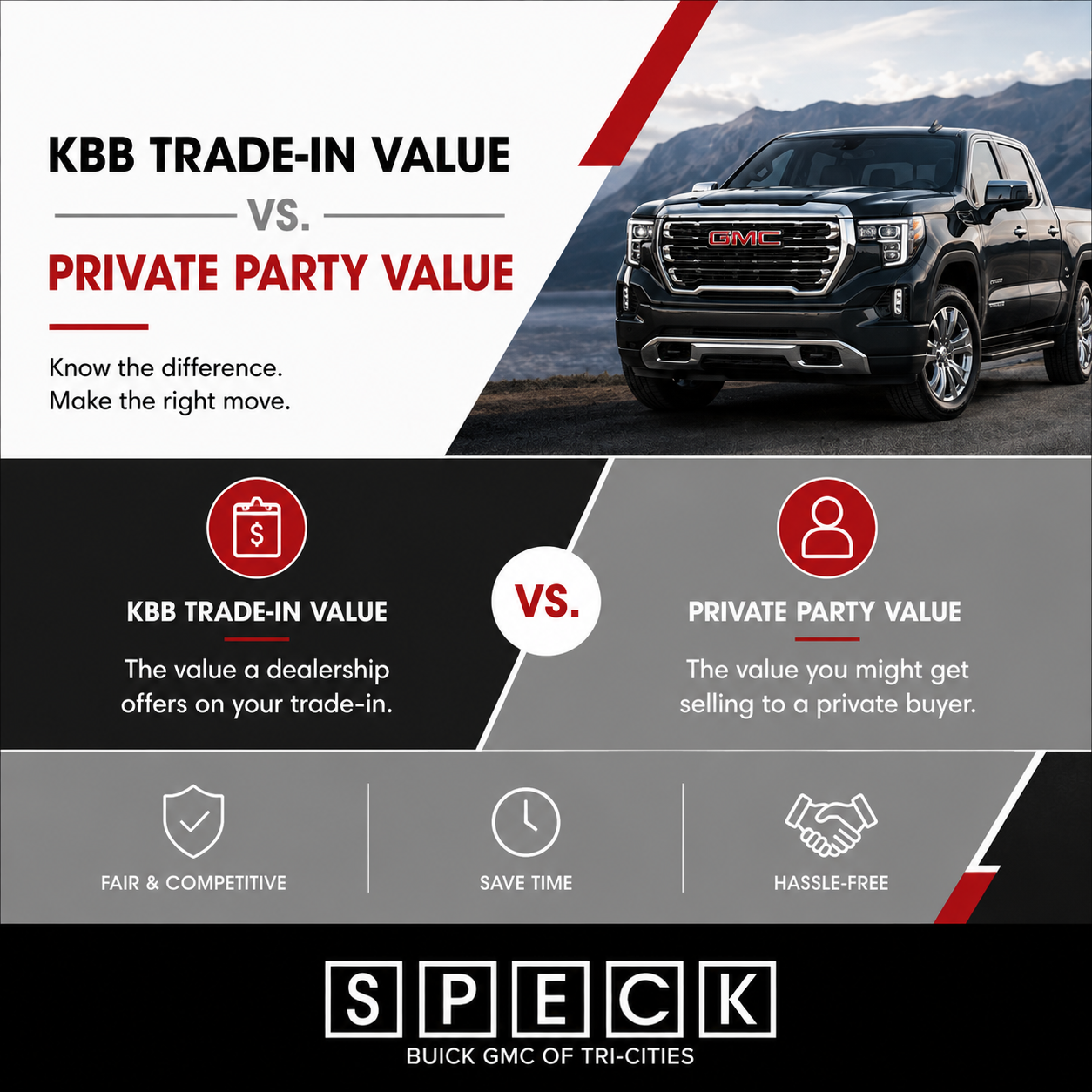
If you’re thinking about selling your vehicle, you’ve probably checked Kelley Blue Book. KBB gives you two different values for your car. Understanding the difference helps you make the best financial decision. Here’s a straightforward breakdown of KBB trade-in value vs private party value.
What Is KBB Trade-In Value?
KBB trade-in value is what a dealership might offer for your vehicle. It is typically lower than private party value. That’s because the dealer takes on costs after purchasing your vehicle. Those costs include inspections, reconditioning, repairs, and reselling. It is a realistic, no-hassle starting point for your vehicle’s worth.
What Is KBB Private Party Value?
KBB private party value is what you might expect selling directly to another person. It is typically higher than trade-in value. That’s because there is no dealer markup or reconditioning cost involved. However, getting that number requires time, effort, and a little luck.
What Is the Difference Between the Two?
The gap between trade-in and private party value varies by vehicle. It can range from a few hundred to several thousand dollars. A well-maintained, low-mileage vehicle will have a smaller gap. Neither number is wrong. They simply reflect two different selling situations.
Benefits of Trading In to a Dealer
Washington State Trade-In Tax Credit
Washington State offers a trade-in tax credit that saves you real money. Your trade-in value is deducted from the taxable purchase price of your next vehicle. For example, buying a $35,000 vehicle with a $10,000 trade means you only pay tax on $25,000. This benefit is not available when selling privately.
Speed and Convenience
Trading in is fast and simple. You bring your vehicle in and walk away with a check or credit toward your next purchase. There are no listings to write, no photos to take, and no strangers to deal with.
No Out-of-Pocket Repair Costs
When you trade in, the dealer handles reconditioning after the purchase. You don’t have to spend money fixing your vehicle before handing it over.
Safety
Selling privately means meeting strangers for test drives and negotiations. Trading in eliminates that risk entirely. You deal with a professional team in a safe, established business environment.
No Waiting
Private sales can take weeks or months to complete. Trading in gets you a real offer the same day. There is no waiting and no deals falling through at the last minute.
Cons of Selling Privately
Time Investment
Writing a listing, taking photos, and responding to inquiries takes significant time. Most private sales require multiple conversations before finding a serious buyer.
No Tax Credit
Selling privately means missing out on Washington State’s trade-in tax credit. That could cost you hundreds of dollars compared to trading in at a dealership.
Uncertain Outcome
Private buyers often negotiate aggressively. After time, effort, and possible repair costs, the final number may not be much higher than a dealer offer.
Loan Payoff Complications
If you still owe money on your vehicle, a private sale gets complicated quickly. A dealership handles all payoff paperwork on your behalf, making the process significantly smoother.
Which Option Is Right for You?
For most Yakima Valley and Tri-Cities drivers, trading in is the smarter move. The tax credit, convenience, and safety benefits often outweigh the potential difference in value. Start with a free KBB estimate at kbb.com before you come in. Then bring your vehicle to Speck Buick GMC for a real, no-pressure appraisal. Our team will make you a competitive offer and apply every dollar toward your next vehicle.
The information provided is for general informational purposes only and does not constitute legal, financial, or professional advice. While we strive to provide accurate and up-to-date information, we make no guarantees regarding the completeness, accuracy, or reliability of the information presented. Any action you take based on the context of this blog is strictly at your own risk. Always consult a qualified professional or specialist for advice specific to your situation. We are not responsible for any losses or damages arising from the use of this blog or its content.
Connect with us

