

Speck Buick GMC of Tri-Cities

Blog / Automotive Tips

The Basics of Towing

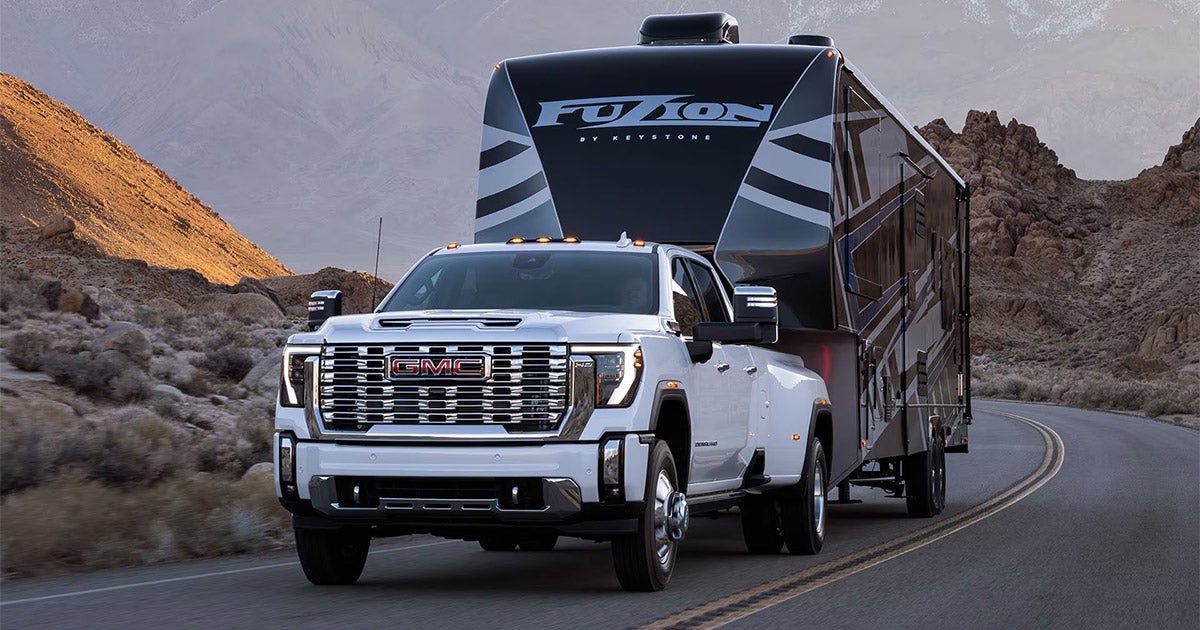
2025 GMC Sierra HD Denali in white towing a large fifth-wheel RV through a scenic mountain road, showcasing powerful towing capability, available at Speck Buick GMC of Tri-Cities in Kennewick, WA.

Keep These Pointers in Tow:

Know your weight limits and read your trailering guide!

It’s important to understand the weight capacity of your vehicle’s towing capability. A lot of factors can determine the trailering limit of a vehicle from the engine, cab, drivetrain, type of hitch setup and more.

Below are a few terms to learn and remember when looking at your vehicle’s trailering guide.

Basic Curb Weight

This is the weight of your vehicle including all of the necessary liquids such as brake, power steering, transmission fluid and anything else the vehicle needs in order to run properly. This weight does not include any passengers or cargo.

GVW (Gross Vehicle Weight)

The Gross Vehicle Weight is the current weight of the vehicle. This is an ever-changing number, due to the fact that life happens! Constant packing, unpacking, extra passengers and more always change the GVW. If you’ve driven down the highway and noticed a weigh station for large trucks and semis, this is the number they’re weighing for.

GVWR (Gross Vehicle Weight Rating)

The Gross Vehicle Weight Rating is given by the manufacturer of the vehicle, and will never change. It is the maximum amount of weight you can carry in your vehicle. It is extremely important to know this number. If the Gross Vehicle Weight exceeds the Gross Vehicle Weight Rating, it is possible to run into many issues that can include an engine overload or other mechanical issues.

GCWR (Gross Combination Weight Rating)

The Gross Combination Weight Rating is a combination weight of both the GVW with passengers and cargo, plus the weight of the loaded trailer.

Tongue Weight

The Tongue Weight (also known as the Vertical Tow Rate) is the amount of weight the trailer is putting on the tow hitch. Depending on your hitch, this weight can be spread in order to ensure that there is not too much weight being put on the hitch. Hitches have different classes depending on the weight you’re looking to tow.

Choose the Right Equipment

Having the right equipment when you are towing is crucial to safely getting the job done. Ensure your vehicle is correctly equipped to tow, with receiver hitch attached to the tow vehicle. When attaching the hitch to the trailer, you’ll need a trailer ball. These can either come already attached to the ball mount or hitch tongue, or are a separate piece. A trailer ball makes it easy to maneuver around and ensure the trailer is level. Of course, make sure the ball mount is compatible with the trailer, hitch, and the weight being placed on it.

Our Parts Specialists here at Speck Buick GMC know what you need. We are more than happy to figure out what size and class of hitch and mount you’ll need in order to get the job done.

Get Connected

In order to prevent any accidents, making sure your trailer brake and lights are connected to your vehicle are important. If you brake suddenly and the person behind you can’t tell, that could cause an avoidable collision. Learn where your connections are, and where they hook up at. You can find a lot of this information in the owner’s manuals of your vehicle and trailer.

Drive Slow

It’s important to understand that your vehicle is carrying extra weight, and not only can it strain the engine, but the connection from trailer to vehicle. While towing, ensure you take corners carefully, and don’t go any faster than necessary. Ensure that you are creeping to a stop, and avoid any sudden braking. Extra caution should be practiced on hills, as these are tricky when towing. Like mentioned, drive slow – and don’t be afraid to use your hazards to let other driver’s know that you’re going to be going at a slower speed. When descending, shifting down can make it easier on your engine.

If you’d like to learn more about towing with your GMC, our experts are more than happy to help!

The information provided is for general informational purposes only and does not constitute legal, financial, or professional advice. While we strive to provide accurate and up-to-date information, we make no guarantees regarding the completeness, accuracy, or reliability of the information presented. Any action you take based on the context of this blog is strictly at your own risk. Always consult a qualified professional or specialist for advice specific to your situation. We are not responsible for any losses or damages arising from the use of this blog or its content.
Posted in:

Related Posts

what is check engine light

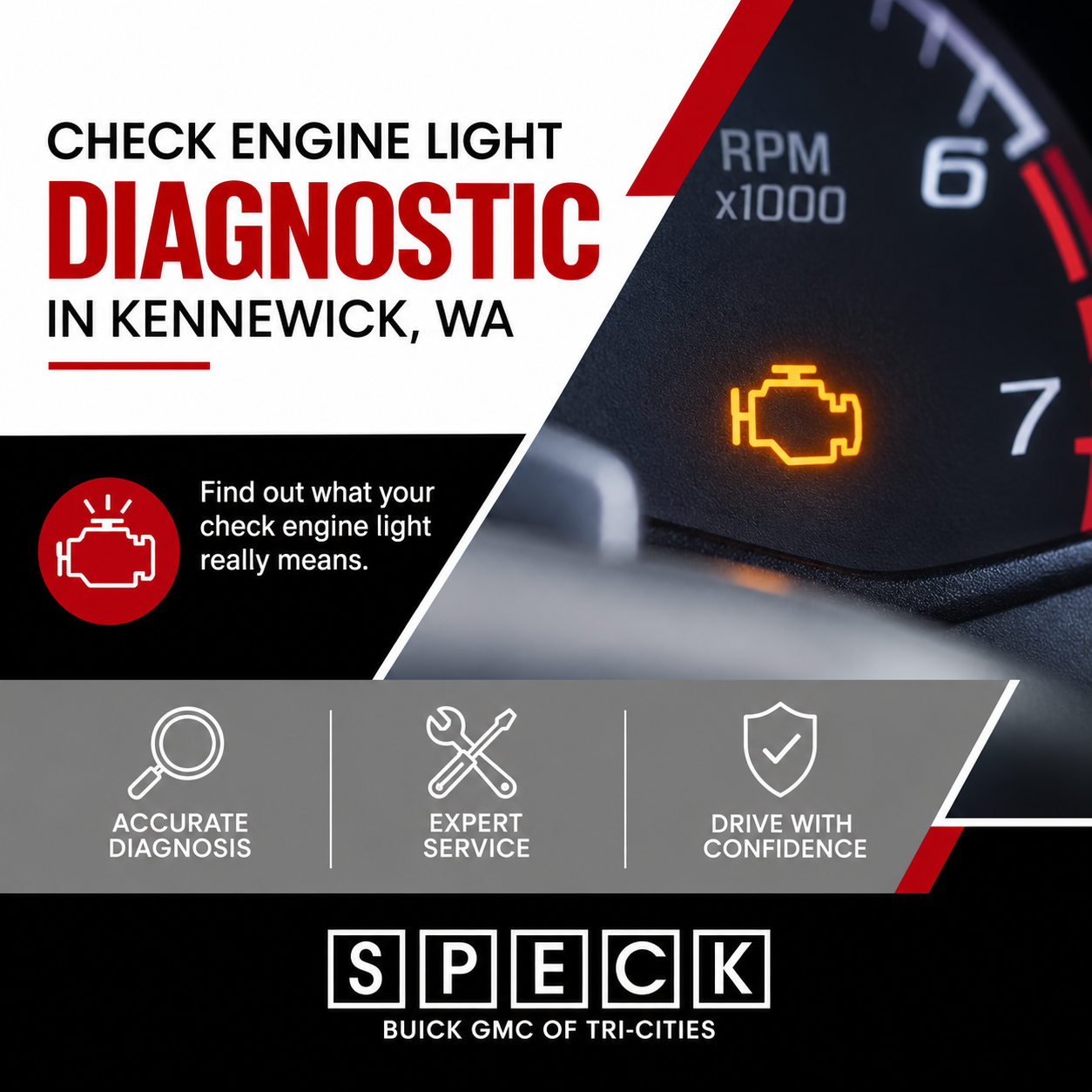
Check Engine Light Diagnostic Near Kennewick, WA

Has your check engine light come on recently? Do not ignore it. A check engine light diagnostic near Kennewick, WA is the fastest and most reliable way to find out what is going on with your vehicle. At Speck Buick GMC, our certified technicians are ready to help. Here is everything you need to know about your check engine light and why a diagnostic matters. What Is the Check Engine Light? The check engine light is part of your vehicle's onboard diagnostic system. It is also known as the malfunction indicator lamp or MIL. Your vehicle's computer monitors hundreds of sensors and systems simultaneously. When something falls outside of normal operating parameters, the computer triggers the check engine light. Think of it as your vehicle's way of telling you something needs attention. It does not always mean something catastrophic is wrong. However, it should never be ignored. Common Causes of the Check Engine Light The check engine light can come on for many different reasons. Some causes are minor and inexpensive to fix. Others can be more serious if left unaddressed. Here are some of the most common reasons your check engine light may be on: Loose or Damaged Gas Cap A loose, cracked, or missing gas cap is one of the most common triggers for the check engine light. It causes fuel vapors to escape from the fuel system. Simply tightening or replacing your gas cap may resolve the issue. It is always worth checking your gas cap first before assuming a bigger problem exists. Oxygen Sensor Failure Your oxygen sensor monitors the amount of unburned oxygen in your exhaust system. A failing oxygen sensor can affect fuel economy and engine performance significantly. It is one of the most commonly replaced components after a check engine light diagnostic. Ignoring a faulty oxygen sensor can lead to damage to your catalytic converter over time. Catalytic Converter Issues Your catalytic converter reduces harmful emissions from your exhaust system. A failing catalytic converter can cause reduced engine performance and poor fuel economy. It is often triggered by ignoring other warning signs like a faulty oxygen sensor. Catalytic converter replacement is one of the more costly engine repairs available. Mass Airflow Sensor Failure The mass airflow sensor measures the amount of air entering your engine. A failing sensor disrupts the air and fuel mixture your engine needs to run properly. Symptoms include rough idling, poor acceleration, and reduced fuel economy. A check engine light diagnostic can quickly identify a faulty mass airflow sensor. Spark Plug or Ignition Coil Issues Worn spark plugs or failing ignition coils are a common cause of engine misfires. Misfires trigger the check engine light and can cause rough idling and poor acceleration. They can also cause long-term damage to your catalytic converter if left unaddressed. Regular spark plug replacement is an important part of routine engine service. Thermostat Issues A failing thermostat can cause your engine to run too hot or too cold. Both conditions can trigger the check engine light and affect engine performance. A faulty thermostat can lead to serious engine damage if not addressed quickly. Our engine service team can diagnose and replace a faulty thermostat quickly and efficiently. EVAP System Leaks The evaporative emission control system prevents fuel vapors from escaping into the atmosphere. A leak in the EVAP system is a common cause of the check engine light. EVAP leaks can range from a simple loose gas cap to a more complex system failure. A professional check engine light diagnostic is the best way to identify the exact source of an EVAP leak. Why Is It Important to Get a Diagnostic Done? Getting a check engine light diagnostic done promptly is one of the most important things you can do as a vehicle owner. Here is why: A diagnostic gives you accurate information about what is going on with your vehicle. It removes all of the guesswork and points directly to the source of the problem. Without a diagnostic, you are essentially guessing at what might be wrong. That can lead to unnecessary repairs and wasted money. Our Service Advisor Dani puts it best: "Even if you think you know what the problem is, there could be a bigger underlying problem." — Dani, Service Advisor, Speck Buick GMC This is advice worth taking seriously. What appears to be a minor issue on the surface can sometimes point to a much larger problem underneath. A professional engine diagnostic gives you the full picture before any repair work begins. It protects you from spending money on the wrong fix. A diagnostic also helps prevent small problems from becoming big ones. Catching an issue early almost always means a less expensive repair. Ignoring the check engine light and hoping it goes away is never a good strategy. The longer you wait, the more damage can occur. What Happens During a Check Engine Light Diagnostic? Our certified technicians connect a professional-grade diagnostic scanner to your vehicle's OBD-II port. The scanner reads the fault codes stored in your vehicle's computer. Those codes tell us exactly which system or component triggered the check engine light. Our technicians then perform a thorough inspection to confirm the root cause of the problem. You receive a clear explanation of what was found and what repair is recommended. There are no surprises and no pressure. Check Engine Light Service Near Kennewick, WA At Speck Buick GMC, we offer professional check engine light service near Kennewick, WA for all makes and models. Our certified technicians have the tools, training, and experience to diagnose and repair any issue quickly and efficiently. We use Genuine GM OEM parts on every engine repair to ensure the highest quality results. Do not ignore your check engine light. Schedule your check engine light diagnostic near Kennewick, WA today. Here is how to book your appointment: Online: Visit our website and click "Schedule Service" By Phone: Call our service department directly Walk-In: Stop by during service hours for same-day diagnostic availability Our team at Speck Buick GMC is ready to help. We serve Kennewick, Richland, Pasco, and the entire Yakima Valley. Come see us today and let our certified technicians get to the bottom of your check engine light quickly and professionally. Schedule Appointment The information provided is for general informational purposes only and does not constitute legal, financial, or professional advice. While we strive to provide accurate and up-to-date information, we make no guarantees regarding the completeness, accuracy, or reliability of the information presented. Any action you take based on the context of this blog is strictly at your own risk. Always consult a qualified professional or specialist for advice specific to your situation. We are not responsible for any losses or damages arising from the use of this blog or its content.
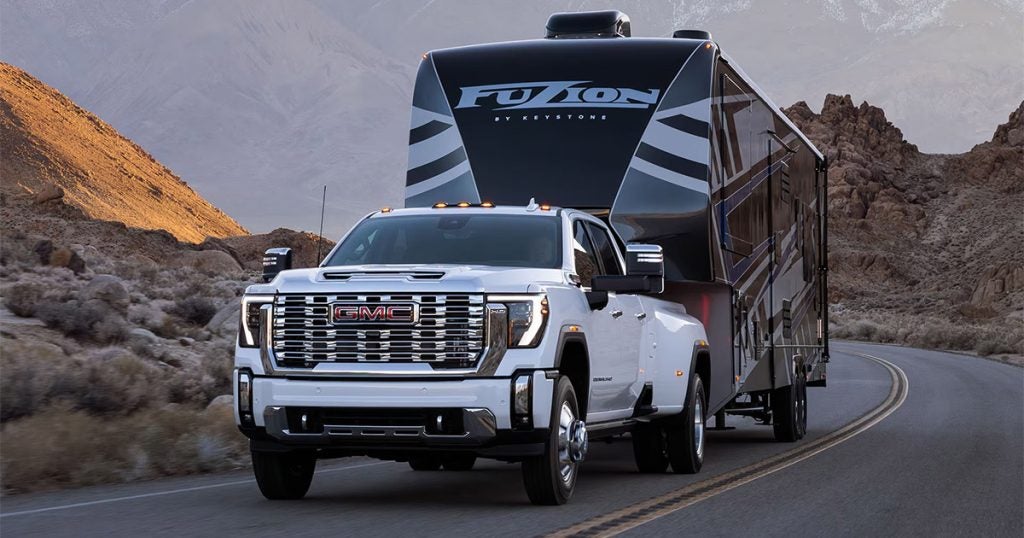
2025 GMC Sierra HD Denali in white towing a large fifth-wheel RV through a scenic mountain road, showcasing powerful towing capability, available at Speck Buick GMC of Tri-Cities in Kennewick, WA.

Best GMC Trucks for Hauling Equipment in the Tri-Cities

If you're hauling equipment in the Tri-Cities, whether it's a boat headed to the Columbia River, a trailer full of farming gear, or heavy machinery for a job site, having the right truck makes all the difference. These are the best GMC trucks for towing. GMC Canyon The Canyon is GMC's mid-size option and a solid choice for lighter hauling needs. With a GMC trucks towing capacity of up to 7,700 lbs. it handles small trailers and recreational equipment with ease . All while being easier to maneuver around town. GMC Sierra 1500 The Sierra 1500 is the go-to half-ton for drivers who want everyday versatility without sacrificing capability. With a GMC truck’s towing capacity of up to 13,200 lbs. The Sierra 1500 handles boats, horse trailers, and mid-size equipment loads without breaking a sweat. GMC Sierra 2500 HD When the job gets serious, the Sierra 2500HD steps up. With a GMC Sierra heavy duty towing payload capacity reaching up to 18,500 lbs. This truck is built for contractors, farmers, and anyone who needs reliable heavy-duty performance day in and day out. GMC Sierra 3500 HD The Sierra 3500HD is the king of the GMC trucks lineup. With a GMC Sierra heavy duty towing payload capacity of up to 36,000 lbs when properly configured. No trailer, equipment load, or job site challenge is too big for this beast. Find Your GMC Truck in the Tri-Cities Whether you need a capable mid-size or a full-on heavy duty workhorse, our team is here to help you find the right fit. Stop by or browse our current GMC trucks inventory and let's get you matched with a truck that works as hard as you do. New GMC Trucks The information provided is for general informational purposes only and does not constitute legal, financial, or professional advice. While we strive to provide accurate and up-to-date information, we make no guarantees regarding the completeness, accuracy, or reliability of the information presented. Any action you take based on the context of this blog is strictly at your own risk. Always consult a qualified professional or specialist for advice specific to your situation. We are not responsible for any losses or damages arising from the use of this blog or its content.

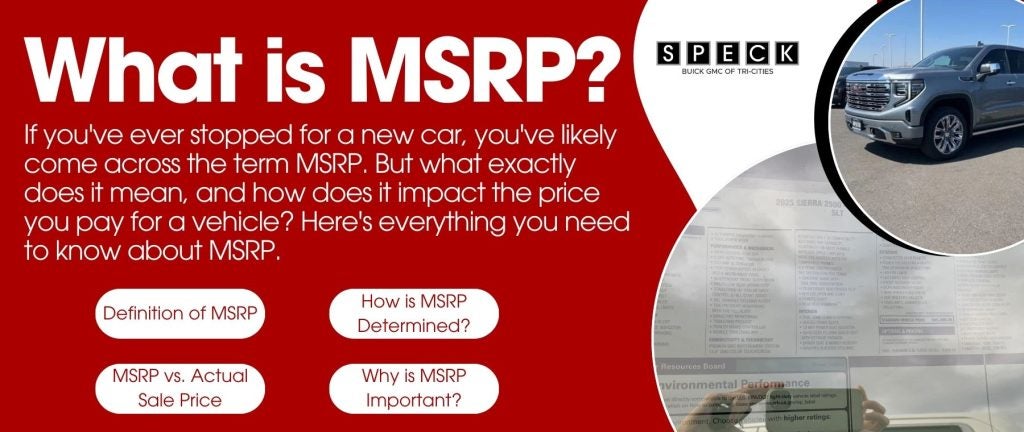
A graphic highlighting the key points explaining what MSRP is

What is MSRP?

If you've ever stopped for a n ew car, you've likely come across the term MSRP. But what exactly does it mean, and how does it impact the price you pay for a vehicle? Here's everything you need to know. 1. Definition of MSRP MSRP stands for Manufacturer's Suggested Retail Price. It is the price that the automaker recommends a dealer charge for a new vehicle. However, this price is not always the final sale price. 2. How is it Determined? Automakers set the MSRP based on several factors, including: Production Costs: The cost of materials and manufacturing. Market Demand: Popular models may have higher MSRPs. Competitor Pricing: MSRP is often set to remain competitive. Features & Trim Levels: Higher trims and added features increase MSRP. 3. MSRP vs. Actual Sale Price While MSRP provides a guideline, it's important to know that the actual price you may differ: Dealer Markups: Some dealerships may charge more than MSRP for high-demand vehicles. Negotiations: Buyers can often negotiate a low price. Incentives & Discounts: Rebates, promotions, and trade-in offers can reduce the final cost. 4. Why is it Important? Understanding can help you: Compare prices across different dealerships. Determine if you're getting a fair deal. Negotiate effectively when purchasing a vehicle. Visit Speck Buick GMC Today MSRP serves as a benchmark price, but it's not set in stone. By researching, negotiating, and taking advantage of discounts, you can often secure a better deal than the sticker price. Visit our dealership today to explore our inventory and find the best pricing options for you! More Frequently Asked Questions Shop New Inventory The information provided is for general informational purposes only and does not constitute legal, financial, or professional advice. While we strive to provide accurate and up-to-date information, we make no guarantees regarding the completeness, accuracy, or reliability of the information presented. Any action you take based on the context of this blog is strictly at your own risk. Always consult a qualified professional or specialist for advice specific to your situation. We are not responsible for any losses or damages arising from the use of this blog or its content.